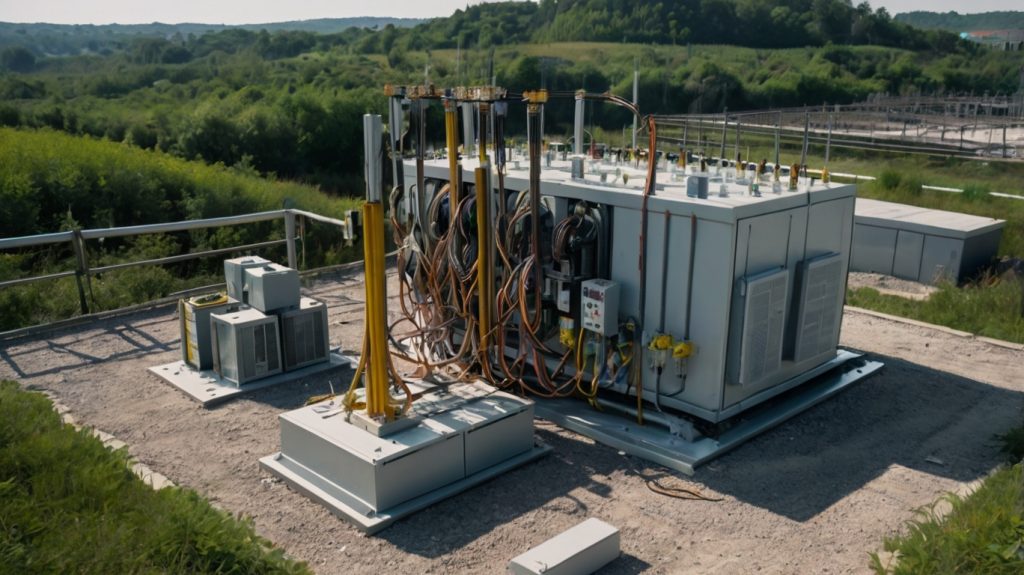
Defensible Performance Description Document for GeoPower Technology
A Scalable and Technological System for Electrical Energy Generation
Author and Inventor of the GeoPower Concept: Hossein Sadegh Ghol Moghaddam
- Purpose of the Document and Scope of the GeoPower Technology Description
This document has been prepared to provide a transparent and defensible framework for the GeoPower technology, creating a basis for initial discussion and evaluation by investors, industrial partners, and decision-making institutions.
The primary focus of this document is to introduce the nature of the technology, its system-level operating logic, capabilities, scalability, and infrastructural position within the electrical energy generation industry. The explanations have been structured to enable a technical and practical understanding of the technology without entering into confidential details, formulas, internal component arrangements, or proprietary design information.
This document is specifically not an executable technical document or engineering manual and does not include details regarding the system’s internal components, component connections, control algorithms, proprietary calculations, or exclusive technical know-how. The purpose of this approach is to preserve the intellectual property of the technology while providing a clear picture of its capabilities and potential.
GeoPower is a developed technology with a physical prototype that has passed through research, design, and performance testing stages. It has moved beyond the concept or conceptual-design stage and has been tested and evaluated by a reputable laboratory. Nevertheless, the content of this document intentionally remains at the level of a defensible performance description, allowing for review, comparison, and initial decision-making regarding the next stages of cooperation.
This document is intended to serve as a basis for continued professional interactions, further technical and economic evaluations, and the definition of cooperation frameworks at industrial and power-generation levels.
- Position of GeoPower Technology in Electrical Energy Generation
GeoPower technology, within the field of electrical energy generation, belongs to the category of stable power-generation systems designed to provide continuous electricity independently of climatic conditions and without reliance on fossil fuels. This technology is neither defined within the framework of conventional thermal power plants nor dependent on common renewable-energy models such as solar or wind power.
As an independent electricity-generation system, GeoPower is capable of operating continuously, 24 hours a day, and from an infrastructural perspective, belongs to the category of technologies that can be used as a base-load generation source. This characteristic distinguishes GeoPower from many modern energy solutions that experience production fluctuations or strong dependence on environmental conditions.
From a grid-structure perspective, GeoPower can operate both on-grid and off-grid, and can be deployed at different scales, ranging from supplying electricity to an industrial or infrastructure unit to contributing to power-generation facilities.
This technology has been developed with the objective of reducing dependence on fuel resources, eliminating direct emissions, and creating a new pathway for electrical energy generation. At the same time, GeoPower has been designed to allow integration with existing electrical infrastructure, conventional conversion equipment, and control systems without requiring fundamental changes to distribution or transmission networks.
The position of GeoPower can be defined at the intersection of technological innovation and conventional energy infrastructure, where a new technology can add stable and scalable generation capacity without disrupting existing structures. This characteristic facilitates industrial adoption and the gradual development of the technology.
- The Problem GeoPower Addresses
3-1. Fundamental Challenges of Electricity Generation in the Modern World
Electrical energy, as the primary foundation of modern industrial, economic, and digital development, plays a vital role in the functioning of societies. Population growth, expanding urbanization, the development of advanced industries, and the increasing dependence of modern infrastructure—including data centers, intelligent systems, and artificial-intelligence-based technologies—have caused electricity demand to increase at an unprecedented rate.
In contrast to this rapid growth in demand, conventional electricity-generation models are primarily based on centralized power plants and heavy infrastructure. The development, maintenance, and modernization of such infrastructure require substantial, time-consuming, and complex investments. This imbalance between consumption growth and the flexibility of generation systems has created a fundamental challenge for the stability of electricity grids in many countries.
At the same time, concentrating energy generation in limited locations and relying extensively on transmission networks creates significant technical and economic risks. Transmission losses, grid vulnerability to natural or technical disruptions, and the difficulty of providing stable electricity to remote or developing areas are among the consequences of the current structure of electrical energy generation and distribution.
Under these conditions, the energy industry faces an undeniable reality: continued reliance on traditional electricity-generation models will not meet the growing needs of the future world. This situation further emphasizes the need to reconsider energy-generation architecture and move toward innovative, stable, and flexible solutions.
3-2. Structural Limitations and Challenges of Conventional Electricity-Generation Methods
The dominant electricity-generation structure in the modern world is primarily based on centralized power plants dependent on fossil fuels or limited energy resources. Although this structure has played a historical role, it now faces a range of structural, economic, and operational challenges. These challenges have not only increased the cost of electricity generation but have also affected the stability, flexibility, and long-term security of electricity grids.
One of the most important challenges is the direct dependence of conventional power plants on complex fuel-supply and transportation chains. The extraction, processing, transportation, and storage of fossil fuels require extensive and costly infrastructure such as pipelines, ports, transportation fleets, and secure storage facilities. Any disruption in this chain—whether caused by geopolitical factors, technical limitations, or climatic conditions—can directly affect the continuity of electricity generation and energy security.
Alongside this structural dependence, electricity transmission and distribution networks also experience significant losses, which become more severe under unfavorable climatic conditions, particularly during extreme heat and cold. These losses mean higher final electricity costs, lower overall system efficiency, and the need for additional investment to compensate for lost energy.
From an economic perspective, conventional power plants typically face long investment-return periods, high operating and maintenance costs, and continuous dependence on fluctuating fuel prices. In addition, direct and indirect environmental costs, including pollutant emissions, depletion of natural resources, and pressure resulting from climate policies, impose significant financial and social burdens on governments and societies.
The combination of these limitations indicates that existing challenges are not limited merely to gradual improvements within current technologies; rather, they are rooted in the fundamental structure of conventional electricity-generation systems. This reality highlights the growing global need for new scientific and technological approaches capable of fundamentally reducing dependence on conventional resources, infrastructure complexity, network losses, and long-term economic and environmental costs.
3-3. The Need to Transition Toward New Approaches to Electrical Energy Generation
Considering the structural, economic, and environmental challenges of conventional electricity-generation systems, new approaches in this field are gradually moving away from purely centralized models dependent on limited resources. The experience of recent decades has shown that the long-term stability and efficiency of electricity grids require greater flexibility in generation scale, power-plant location, and the way generation facilities interact with transmission and distribution networks.
One of the main aspects of this transition is the movement toward energy infrastructure capable of operating simultaneously in centralized and decentralized forms. Such infrastructure makes it possible for electricity generation to be carried out according to regional needs and grid conditions, both at the scale of large power plants and through units located close to consumption points. Without completely eliminating transmission networks, this approach reduces critical dependence on them and increases system resilience against disruptions.
Although energy losses during electricity transmission and distribution cannot be completely avoided, one effective way to reduce these losses is to shorten the distance between the point of generation and the point of consumption. Developing power plants near consumption centers—such as the outskirts of cities, industrial areas, or stable consumption hubs—can significantly improve overall system efficiency and reduce pressure on nationwide networks.
From a strategic perspective, modern electricity-generation infrastructure should move away from strict geographical limitations, so that the selection of a power-plant location becomes less dependent on specific climatic conditions or access to conventional energy resources. This characteristic enables a more balanced development of generation capacity across different locations and reduces excessive concentration in specific regions.
Overall, the future of electrical energy generation is moving toward technologies that, in addition to meeting the technical requirements of the grid, can simultaneously address economic, environmental, and energy-security requirements at different scales. Such an approach creates the foundation for a new generation of energy infrastructure that is flexible, scalable, and aligned with the long-term evolution of power systems.
- Operating Logic of the GeoPower System
4-1. Overall Multilayer Architecture of the System
The GeoPower system is designed based on an integrated, multilayer architecture in which each layer performs a specific and defined role in the overall process of electrical energy generation and management. This multilayer structure enables functional separation, greater controllability, and adaptation of the system to diverse environmental and operational conditions.
At the conceptual level, the system consists of a set of electrical and electromagnetic subsystems that operate in coordination with one another. These subsystems include the electrical-input reception and regulation section, the section interacting with the earth environment, energy-processing and regulation units, and finally the electrical-output stabilization and delivery section. Each of these layers is designed in a modular manner and can be independently adjusted and optimized.
This architecture means that the system does not function merely as a single piece of equipment, but rather as a configurable energy infrastructure. This infrastructure can be configured and adjusted according to ground conditions, grid requirements, or the needs of the final consumer. This approach increases the flexibility of the system across different scales and operating scenarios.
The multilayer architecture of GeoPower also enables gradual development, performance improvement over time, and adaptation to future scientific and technical advancements without requiring fundamental changes to the entire system. This characteristic distinguishes GeoPower from many conventional electricity-generation systems based on rigid and inflexible structures.
4-2. Dependence of System Performance on the Electrical and Physical Conditions of the Earth
The performance of the GeoPower system is directly related to the electrical, physical, and geophysical characteristics of the earth environment at the system’s installation site. As an active physical environment, the earth possesses characteristics such as soil resistivity, geological layering, distribution of electrical charges, moisture, mineral composition, and natural electromagnetic conditions, all of which can influence the behavior of electrical systems at the infrastructural scale.
GeoPower is designed so that these characteristics are considered not as limitations, but as part of the system’s operating environment. Therefore, the design of each project is based on analysis of site conditions, grounding measurements, soil electrical resistance, and the physical characteristics of the installation ground. These data serve as fundamental design inputs and play a decisive role in configuring the system and adjusting its functional layers.
Within this framework, the earth is not regarded merely as a physical base for installing equipment, but as an active electrical environment within the system’s operating process. This approach allows the system to operate in an adjustable and stable manner under diverse geographical conditions, different geological structures, and various climates.
The adaptive nature of GeoPower’s design means that each system is calibrated and adjusted according to the actual conditions of its installation site. This enables stable, safe, and predictable operation while eliminating dependence on standardized and uniform environmental conditions. As a result, GeoPower, as an infrastructural technology, can be deployed across a wide range of geographical and environmental areas without dependence on conventional power-plant patterns.
4-3. The Presence of an Electrical Input and Its Role in System Activation
The GeoPower system has a controlled electrical input whose role is to provide the energy required for excitation, startup, and stabilization of the system’s operating process, rather than directly supplying the final output power. This electrical input acts as a control parameter that provides the initial conditions necessary for initiating and maintaining the electrical-physical processes within the system.
The electrical input in GeoPower is used for the following purposes:
- Activating the functional layers of the system and establishing stable operating conditions;
- Adjusting electrical fields and control parameters associated with the proprietary design;
- Synchronizing system operation with the electrical characteristics of the earth and the grounding system;
- Managing the dynamic behavior of the system under different operating conditions.
The key point is that the relationship between the electrical input energy and the system’s output energy is not a direct and linear relationship in the manner of conventional electricity-generation systems. The electrical input acts solely as a driving and regulating factor and provides the necessary conditions for utilizing electrical phenomena associated with the earth and the structure of the system.
For this reason, the design of the electrical-input section in GeoPower is fully dependent on:
- The geological and electrical conditions of the installation site;
- Grounding measurements and analysis of the earth’s resistance and electrical behavior;
- The multilayer architecture of the system and its proprietary control parameters.
It can therefore be engineered and individually configured for each project.
This approach places GeoPower, conceptually, among systems that use electrical input energy as an initiating and regulating factor for a more complex physical process, rather than as the primary source of power generation. This is a fundamental difference that distinguishes it from most conventional electricity-generation systems.
4-4. System Scalability, Dependence on the Ground Environment, and Operational Stability
The GeoPower system is designed around a multilayer system architecture dependent on the ground environment, such that its electrical performance is defined not independently of the environment, but through direct interaction with the physical, electrical, and geoelectrical characteristics of the installation site. Within this framework, the earth is considered an active part of the system, and the final design of each project requires a detailed evaluation of local conditions, including soil characteristics, ground electrical resistance, grounding-well behavior, and their connection pattern to the main system structure.
The GeoPower architecture is inherently modular. Each functional module contains a defined chain of electrical and electromagnetic components that directly interacts with a layer of the grounding system. Increasing the system’s output capacity is achieved not by enlarging a single unit, but through controlled expansion of the number of modules and grounding layers. This approach enables technical scalability without a nonlinear increase in system complexity, risk, or critical failure points.
In this system, the design of grounding wells and their distribution is an integral part of the overall system engineering. The number, geometric arrangement, and specifications of each grounding well are functions of the target power, ground conditions, and layered structure of the system. For this reason, GeoPower is inherently a project-based technology, and each implementation requires a customized design appropriate to the installation site. Although this characteristic prevents the use of completely identical versions at all geographical locations, it provides, in return, operational stability, high adaptability, and precise optimization of the system for each project.
The scalability logic of GeoPower is defined through a combination of vertical development—increasing functional layers and interaction with the earth—and horizontal development—combining multiple independent systems into a centralized or semi-centralized structure.
This structure enables large power plants to be designed as collections of independent yet interconnected units, allowing operation, maintenance, periodic testing, and operational risk management to be carried out with greater flexibility, while preventing a disruption in one section from causing a complete shutdown of generation.
From the perspective of operational stability, the GeoPower system is designed not to depend on conventional energy resources, climatic conditions, or time cycles, and to operate continuously, 24 hours a day. Given the infrastructural nature of the system and its interaction with the earth, its output behavior over long periods can be monitored, adjusted, and optimized, making it suitable for industrial-scale and infrastructural applications.
Overall, GeoPower is defined not as a single device, but as a scalable technological framework that is dependent on its ground environment and can be re-engineered for each project. This framework can be developed from limited scales to large infrastructural applications without compromising the fundamental principles of system operation or stability.
- Overall Structure of the GeoPower System
5-1. Multilayer Architecture of the GeoPower System
The GeoPower system is designed based on a multilayer and hierarchical architecture, in which each layer performs a specific and independent functional role in the overall process of electrical energy generation. This architectural approach enables the management, control, and optimization of system behavior at different scales and prevents the concentration of functionality in a single component.
Within this structure, the layers are conceptually and functionally separated from one another, while simultaneously operating as an integrated and coordinated system. This layered separation preserves system stability and allows changes resulting from ground conditions, project requirements, or required power scale to be applied to the overall structure in a controlled and manageable manner.
The multilayer architecture of GeoPower is designed so that:
- Each layer has a specific responsibility within the system’s functional chain;
- Interaction among the layers takes place according to defined and adjustable engineering logic;
- The system can be developed or upgraded without requiring a complete redesign of its structure.
This approach distinguishes GeoPower from single-structure and non-adaptive systems and provides the foundation for implementing the technology in diverse projects, under different site conditions and at different power scales. The multilayer architecture is one of the key foundations of the technology’s stability, scalability, and long-term development capability.
5-2. Conceptual Approach to Separating the Roles of Layers in the GeoPower System
Within the GeoPower architecture, each layer is defined as an independent functional block responsible for a specific role in the overall chain of electrical energy generation, management, and stabilization. This separation of roles is based not on individual physical components, but on functional tasks and system interactions.
The separation of layers allows different system processes—from receiving and regulating input energy to interacting with the earth, managing internal transfer, and stabilizing the output—to operate in a decentralized but coordinated manner. Accordingly, a change or adjustment in the operation of one layer does not necessarily disrupt other layers, and overall system behavior remains controllable.
From a systems-engineering perspective, this approach creates several key advantages:
- Reduced functional complexity through the separation of tasks;
- Increased stability and reliability under different site conditions;
- Project-based adjustment and calibration without changing the overall system logic;
- Prevention of critical dependence on a single point or component.
The separation of layer roles also provides the foundation for future development, increased power scale, and adaptation to different operational requirements. This characteristic makes GeoPower a flexible infrastructural technology that can be used in a wide range of applications, from independent projects to large, centralized electricity-generation systems.
5-3. System Modularity and Its Engineering Implications
GeoPower is designed according to a modular and aggregative logic, so that the final capacity of the system does not necessarily depend on a single unit, but can be achieved through the combination of several equivalent and interconnected systems or modules. This approach is considered one of the key principles in the design of modern infrastructural systems.
Modularity allows the system to be implemented at different power scales. Instead of excessively increasing the complexity of a single large unit, several independent but coordinated units can be used. This structure provides significant engineering advantages, including:
- Increased system reliability through the distribution of operational risk;
- Easier maintenance, periodic repairs, and operational management;
- Reduced impact of a potential shutdown of one section on the overall system;
- Gradual expansion of power capacity according to project or market requirements.
From a power-plant design perspective, this modular logic allows systems to be deployed in centralized or semi-centralized configurations at a single site or across several sites close to consumption points. Such flexibility not only reduces geographical limitations but also enables generation to be located closer to consumption and allows better management of network losses.
Overall, the modular nature of GeoPower is not merely a design feature, but an engineering strategy for scalability, stability, and long-term operation, playing an important role in preparing the technology for large projects, infrastructure investments, and international markets.
5-4. Project-Based Calibration and Adaptation of the System to Operating Conditions
As an infrastructural technology based on controlled interaction with the earth, the GeoPower system is designed so that calibration is an inherent and inseparable part of its functional architecture. Calibration is not defined as a corrective stage, but as an engineering mechanism required to achieve maximum system stability, usability, and adaptability.
Since electrical characteristics originating from the earth—including voltage range, current intensity, frequency stability, and waveform—are functions of the physical and electrical conditions of the site environment, the GeoPower system is designed and adjusted on a project-specific basis according to the characteristics of each site. This approach ensures that the processes of converting, regulating, and preparing electrical energy are carried out in the most optimized condition possible for each project.
System calibration begins simultaneously with engineering design and continues after installation at the operating site. Within this framework, the multilayer architecture of the system plays a key role in the gradual and controlled adaptation of input energy to operational requirements. Conceptually, each layer of the system structure is responsible for regulating, stabilizing, and preparing energy at different levels, ultimately providing a controllable and stable electrical output that conforms to industrial consumption standards.
This calibration process enables precise control of operational parameters, including output voltage, current, frequency, and waveform, and ensures that the system can provide stable and repeatable performance at different scales without dependence on climatic conditions or geographical limitations. Accordingly, project-based calibration, as a key engineering advantage, plays a decisive role in the industrialization, scalability, and long-term reliability of the GeoPower system.
- System Development Status and Technology Maturity
6-1. Current Development Status and Technology Maturity Level of GeoPower
The GeoPower system is the result of a gradual development process based on engineering design, controlled practical testing, and performance analysis under real conditions. The technology has moved beyond the conceptual stage and has reached a level of maturity at which physical realization, stable output generation, and behavioral evaluation at different scales are possible.
A functional prototype of the system has been designed and built, and during internal practical tests, its operating logic, overall system stability, and dependence on environmental parameters have been examined. These tests were not conducted for public demonstration, but for conceptual validation, identification of performance ranges, and stabilization of the design framework.
The results obtained indicate that GeoPower is a project-based system, meaning that its final performance is directly dependent on ground conditions, grounding-infrastructure configuration, and the engineering architecture selected for each installation site. This characteristic is not considered a limitation, but rather an indicator of the infrastructural and engineered nature of the technology, enabling precise adaptation to actual operating conditions.
From the perspective of technology maturity, GeoPower is at a stage where its operating logic has been established, its physical implementation has been demonstrated, and the pathway toward industrial and power-generation applications can be clearly defined. The current development focus is not on fundamental feasibility, but on design optimization, engineering scalability, and project-specific adaptation of the system to different operating scenarios.
6-2. Testing, Performance Evaluation, and Practical Validation of the System
As part of its development process, the GeoPower system has undergone a series of practical tests and evaluations aimed at examining electrical behavior, operational stability, and system sensitivity to environmental conditions. These tests were not conducted as theoretical simulations, but were based on an active physical prototype and performed under real conditions.
During these evaluations, it was determined that system performance is significantly dependent on the characteristics of the installation site, the quality and arrangement of grounding wells, and the electrical settings of the internal layers. This dependence was not regarded as a limitation, but was identified as a key design variable that enables optimization of system output for each project.
The tests conducted have shown that, when designed and calibrated according to site conditions, the system is capable of producing stable and controllable output. The system’s behavior in response to changes in ground parameters and internal settings has also demonstrated identifiable and analyzable patterns, which have become the basis for developing the project-based and scalable architecture of GeoPower.
The results of these tests have taken the engineering framework of the system beyond a purely conceptual structure and transformed it into an operational technology with predictable behavior, so that development at higher scales is designed not on the basis of assumptions, but on practical experience and real data.
According to tests and evaluations conducted by an independent laboratory, the system demonstrated very good performance under demanding laboratory conditions and according to the highest current laboratory standards, with successful results recorded. This testing indicates that the GeoPower system has entered the practical and operational phase and possesses significant capability for generating electrical energy under different conditions and in different geographical environments.
6-3. Dependence of System Performance on Site Conditions and Project-Based Design
The performance of the GeoPower system is inherently dependent on the physical and electrical characteristics of the installation site. Parameters such as soil-layer structure, ground electrical resistance, the arrangement and specifications of grounding wells, and the geoelectrical conditions of the site play a decisive role in system behavior and final efficiency. Therefore, GeoPower has not been designed as a fixed, pre-defined device, but rather developed as an adaptive infrastructural technology.
Within this approach, each project is considered an independent engineering problem, and the system is designed based on site-specific data, grounding measurements, and operational requirements. This dependence is not considered a limitation; rather, it enables optimized and stable performance under diverse geographical conditions and allows the system to become aligned and compatible with its installation environment.
The project-based nature of GeoPower’s design enables the system to achieve stable and repeatable electrical behavior at different sites through adjustment and adaptation of its internal architecture and component arrangement. This characteristic provides the engineering foundation required for developing the system at industrial and power-plant scales and transforms GeoPower into an adaptable solution for implementation under real and diverse operating conditions.
6-4. Transition from an Operational System to Industrial and Power-Plant Implementation
The development path of GeoPower has progressed through practical experience, engineering analysis, and step-by-step decision-making. At the current stage, the system has entered the decision-making phase for industrial and power-plant deployment. The system’s operational behavior, its dependencies on site conditions, and its design requirements at different scales have been practically identified and consolidated into a coherent engineering architecture.
At this stage, the remaining challenges are not related to “understanding the technology” or “proving the operating principle”; rather, they are directly related to project-based design, adaptation of the system to site characteristics, and scale engineering at the power-plant level. This means that the primary development focus is on optimizing infrastructural configuration, module management, long-term operational requirements, and system integration at larger scales.
The modular and multilayer architecture of GeoPower enables a controlled transition from medium-power centralized systems to very high-capacity power-plant configurations, allowing capacity expansion without structural bottlenecks and while maintaining operational stability. This approach has been designed in alignment with power-plant engineering standards, grid requirements, and industrial operating considerations.
As a result, GeoPower has reached a point where it can enter practical interactions with industry, decision-making institutions, and professional investors. The nature of these interactions is decision-oriented, project-based, and focused on real implementation at an industrial scale. This stage marks the beginning of an operational development path aimed at establishing the technology sustainably within electricity-generation infrastructure and addressing major energy needs at national and international levels.
- Scalability and Power Scenarios
7-1. Minimum Design and Deployment Scale of the System
The GeoPower system has been designed so that deployment does not necessarily have to begin at very large power-plant scales. The minimum design scale is intentionally defined within a range that allows stable evaluation of system performance while also being meaningful and reliable from engineering, economic, and operational perspectives.
Within this framework, the system can begin at medium and semi-industrial scales. These scales fully incorporate all major components of the system architecture, the multilayer operating logic, dependence on site conditions, and project-based calibration processes. This approach ensures that system behavior at higher scales is a direct extension of the same engineering and operational logic, rather than the result of an experimental leap or discontinuous design.
The selection of the minimum deployment scale is based on a combination of site conditions, required power, operational considerations, and project objectives. It is considered the starting point of an expandable development path rather than an inherent limitation of the technology. For this reason, GeoPower was designed from the outset with an infrastructural and scalable perspective, and even at its lowest deployment level, it retains all prerequisites for transition to higher scales.
7-2. Deployment Flexibility and System Scalability Logic
As an infrastructure-based electricity-generation technology, GeoPower has been designed to be deployable across a diverse range of electrical energy-generation projects. The selection of system scale, generation capacity, and installation location is defined according to the technical, safety, and infrastructural requirements of each project and is not restricted to a predetermined scenario.
At all scales, GeoPower operates as a power-generation unit with a power-plant nature, and its design is based on principles of stable operation, engineering control, and responsible placement. The system’s modular and multilayer architecture enables capacity expansion and adaptation to site conditions without changing its fundamental operating logic.
This approach allows the system to be deployed in different configurations and developed from limited capacities to higher levels according to project requirements, without compromising safety principles, operational stability, or technical control. Within this framework, GeoPower is not a single-purpose solution, but a flexible infrastructural platform for electricity generation.
7-3. The Megawatt Reference Unit as the Basis for Design and Analysis
Within the GeoPower system architecture, the megawatt is selected as the reference unit for engineering design, analysis, and scaling. This choice is not intended to limit the capacity of the system, but to provide a standard framework for technical, economic, and implementation evaluation.
Using the megawatt as the reference unit enables precise definition of design parameters, including equipment placement, safety requirements, power control, electrical infrastructure, and operating scenarios. This approach ensures that engineering analyses, regardless of the final scale of the project, are conducted according to a repeatable and comparable framework.
The megawatt reference unit also plays a key role in modeling system development. All higher or lower capacity levels are defined through the combination, aggregation, or separation of reference units without changing the operating logic, control structure, or safety principles of the system. Thus, system scalability is the result of structural engineering development rather than a redesign of the technology.
Selecting this reference unit also enables transparent communication and decision-making with project stakeholders, including investors, operators, and executive institutions, because the megawatt is recognized as a common language in electricity-generation projects. As a result, project-level analyses and decisions are based on understandable, comparable, and implementation-oriented indicators.
Within this framework, GeoPower is defined as a scalable power-generation system in which the megawatt unit is merely a tool for analysis and design, not an upper or lower limit on operational capacity.
7-4. Centralized and Decentralized Power-Generation Scenarios
The GeoPower system architecture has been developed from the outset to support both centralized and decentralized power-generation scenarios. The choice between these two scenarios is a project-based decision determined by site, infrastructure, operation, and investment-model considerations, rather than inherent technological limitations.
In centralized scenarios, the system can operate as a power-generation core with aggregated capacity, with reference units installed at a specific site and their outputs managed in an integrated manner and delivered to the grid or final consumer. In this case, the focus is on optimizing site design, managing aggregated power, and maintaining control-system integration.
In contrast, in decentralized scenarios, reference units can be distributed across several independent locations, with each unit or cluster of units designed and operated according to local conditions. This approach provides greater adaptability to infrastructural, geographical, or operational limitations without changing the system’s operating logic.
The key point is that transitioning between centralized and decentralized scenarios does not require a change in the fundamental system architecture. The differences are primarily defined at the level of project design, placement, grid connection, and operational strategy. Therefore, from an engineering perspective, GeoPower is a flexible system capable of supporting both deployment models.
This dual approach also enables hybrid scenarios, in which part of the capacity is developed centrally and another part is developed in a decentralized manner within the same project. Consequently, the decision regarding the power-generation configuration becomes part of project design rather than a technological limitation.
- System Implementation Requirements
8-1. Geophysical Requirements and Evaluation of Ground Characteristics
Implementation of the GeoPower system requires a deep understanding and detailed analysis of the geophysical characteristics of the installation site. In this system, the earth is not merely regarded as a physical environment or installation base, but as an active component with specific electrical behavior that directly contributes to system performance, stability, and capacity. Therefore, examining ground characteristics during the project-design stage is considered a fundamental and indispensable requirement.
From an engineering perspective, the electrical behavior of the earth depends on an interconnected set of factors, including the mineral and crystalline composition of the soil, the layered structure of the earth, the amount and distribution of moisture, the presence of underground water reservoirs, temperature variations, and effective electrical resistance at different depths. These factors determine how the earth responds to electrical excitation, how stable that response is, and how much it varies over time and under different environmental conditions.
The microstructural characteristics of soil, particularly the types of crystals and minerals that constitute it, directly affect the way electrical charges are conducted, stored, and released. Likewise, the presence or absence of groundwater and its level of conductivity can significantly alter the effective resistance of the earth and the pattern of current distribution. As a result, two geographical sites that are relatively close to one another may exhibit completely different electrical behavior.
Accordingly, within the GeoPower system, ground evaluation is carried out as a geophysical-electrical analysis aimed at identifying the earth’s response capacity, the stability of that response over time, and potential operational limitations. This evaluation forms the basis for decisions regarding system architecture, the number and arrangement of grounding points, and the selection of engineering parameters for the internal layers of the system.
Ultimately, the emphasis on geophysical requirements means that system performance is based not on general assumptions, but on detailed knowledge of the ground at the project site. This approach enables stable, repeatable, and predictable performance and represents one of the fundamental differences between GeoPower and conventional electrical energy-generation systems.
8-2. System Design Based on Adaptation to Ground Characteristics and Site Conditions
The project-level design of the GeoPower system requires a precise understanding of the electrical and physical behavior of the installation site, and this is considered one of the fundamental engineering requirements. The earth is a complex environment consisting of layers of soil, rock, minerals, and subsurface water, and its electrical properties are directly influenced by this composition.
Within the earth, electrical properties such as conductivity and electrical resistance depend on mineral composition, moisture content, the crystalline structure of particles, and the presence of dissolved substances in water contained within pores. Moist, mineral-rich soils with high ionic conductivity have lower resistivity, whereas dry rock formations or structures with very limited pores exhibit higher resistance.
The relevance of these characteristics to system design lies in the fact that the earth’s response to electrical current, the behavior of its constituent layers, and the way current passes through different layers are among the input parameters of the system’s engineering design model. For example, the presence of saturated water or underground water reservoirs can increase the electrical conductivity of the earth, while hard rocks with high resistance can restrict conductive paths. These factors must be considered in the design of transformer layers and the grounding arrangement.
To model this situation, geoelectrical evaluations are conducted based on soil and rock resistivity models, providing information about the layered structure of the earth, water penetration, and changes in electrical properties with depth. These studies show that the electrical response of the earth depends not only on the type of mineral materials and water accumulation, but also on current-distribution mechanisms among soil and rock particles and their interaction with ground electrodes.
Accordingly, the GeoPower system must be specifically designed based on site electrical models and measured data from the installation ground, so that:
- The earth’s response to induced and electromagnetic currents can be modeled predictably;
- Interaction between the designed transformer layers and the ground environment can be optimized;
- The distribution of current and potential throughout the volume of the earth can be considered in relation to the system’s installation location;
- And ultimately, the currents and induced voltages within the network and around the site can be controlled within safe and engineered limits.
This approach moves the design away from a “general and hypothetical” state and transforms it into a data-driven, site-specific engineering process, in which the system’s response to actual ground conditions is incorporated into analyses and modeling and optimized accordingly.
8-3. Infrastructure Requirements and Connection to Networks and Public Services
Deployment and operation of the GeoPower system, in addition to geophysical considerations and customized design, require a set of technical and operational infrastructure that enables stable, safe, and controllable system performance at an industrial scale. These requirements are considered not as technological limitations, but as the standard framework for deploying an electrical power-generation unit.
At the electrical-infrastructure level, transmission and distribution paths appropriate to the designed system capacity are essential. This includes grid-connection equipment, protection systems, switching equipment, and coordination with the operating standards of local or regional networks. Depending on the deployment scenario, the system can be designed either connected to the grid or independently of it; however, in both cases, the electrical infrastructure must support the system’s rated power and operating conditions.
From the perspective of control and operational infrastructure, access to monitoring, data-recording, and operational-control systems is a key requirement. These systems enable observation of system behavior, stability analysis, and engineering intervention under specific conditions, and they play an essential role in ensuring operational safety and reliability.
Regarding public services, appropriate access to transportation routes, installation and maintenance infrastructure, and the ability to carry out planned operational and repair activities are integral parts of implementation requirements. These requirements are particularly important in power-plant or industrial-scale projects in determining system location and life-cycle costs.
The key point is that the infrastructural requirements of the GeoPower system are defined in alignment with the conventional requirements of electricity-generation power plants and do not require unusual infrastructure or facilities outside common industrial frameworks. This characteristic enables the integration of the system into existing energy projects or the development of new infrastructure without unnecessary complexity, facilitating decision-making and implementation for stakeholders.
- Key Advantages and Distinguishing Features of the GeoPower System
9-1. Operational Independence from Conventional Energy Resources and Fuel-Supply Chains
One of the fundamental distinctions of the GeoPower system is its operational independence from conventional primary-energy supply chains. Within the system, electrical power generation does not depend on the continuous consumption of fossil fuels, biological resources, solar radiation, or wind flows, and its operation is not affected by energy-market fluctuations, logistical limitations, climatic conditions, or geopolitical risks associated with fuel supply.
In conventional electricity-generation systems, a significant portion of operational risk and hidden costs is associated with fuel supply chains, storage, transportation, safety management, and the stability of access to the primary energy source. This dependence not only increases operational complexity but also makes power plants vulnerable to external disruptions, price fluctuations, and infrastructural limitations.
In contrast, the GeoPower architecture is designed so that the primary energy interaction source is the ground environment and the physical-electrical conditions of the system’s installation site. This characteristic means that after deployment and project-based calibration, system operation can take place without continuous provision of external consumable resources, shifting the focus of operational management from “energy supply” to “performance control and monitoring.”
This operational independence has several strategic consequences, including:
- Reduced risk of production stoppage caused by disruptions in supply chains;
- Increased predictability of performance and long-term operational planning;
- The possibility of deploying the system in areas without stable access to fuel or conventional energy resources;
- Reduced structural dependence of the project on uncontrollable external factors.
As a result, GeoPower is not only an electricity-generation system, but also an energy infrastructure with a high degree of operational self-reliance that can redefine conventional frameworks of fuel dependence in industrial and power-plant environments.
9-2. Generation Stability and Continuous Operation Independent of Climatic Conditions
The stability of electrical power generation is one of the key indicators in the technical and economic evaluation of any energy infrastructure. The GeoPower system is designed so that its operation does not have direct dependence on short-term natural cycles, climatic changes, seasonal fluctuations, or weather conditions and can maintain continuous and predictable electricity generation.
In many conventional and modern energy-generation technologies, system output depends on variables such as solar radiation intensity, wind speed and stability, ambient temperature, air humidity, or seasonal conditions. These dependencies cause production fluctuations, the need for extensive energy storage, and greater complexity in grid management and operation. In such structures, output stability is often achieved not inherently, but through the addition of control and compensatory layers.
In contrast, GeoPower operates based on stable interaction with the electrical characteristics of the ground environment—a medium whose behavior over time changes much more slowly and predictably than atmospheric and climatic variables. This characteristic enables highly stable electricity generation and continuous 24-hour operation without exposing the system to sudden declines or shutdowns caused by environmental conditions.
Operational stability in GeoPower does not merely mean “no interruption of generation.” It refers to the system’s ability to maintain controlled electrical behavior, provide a predictable response to load, and preserve output characteristics over long periods. This plays a decisive role in:
- Increasing operational reliability at industrial and power-plant scales;
- Reducing the need for costly backup and storage systems;
- Simplifying grid management and generation planning.
Overall, by relying on an operating logic independent of climatic conditions, GeoPower enables the definition of a stable and continuous electricity-generation model that goes beyond the inherent limitations of many common energy-generation technologies and is aligned with the infrastructural requirements of modern power systems.
9-3. Ability to Deploy Close to Consumption Points and Reduce Structural Network Losses
One of the fundamental distinctions of the GeoPower system is the removal of conventional requirements regarding the geographical distance between the location of energy generation and the location of electrical consumption. Unlike traditional centralized power plants, which due to limitations related to fuel, water resources, climatic conditions, or environmental requirements are often forced to be located far from consumption centers, GeoPower can be designed and implemented close to the consumption load.
This characteristic directly reduces structural losses in transmission and distribution networks. These losses result from line resistance, voltage drops, network-capacity limitations, and the need for extensive transmission infrastructure, which in many conventional systems causes a significant portion of generated energy to be lost before reaching the consumer.
Within the GeoPower architecture, the system can be defined as a local or regional generation infrastructure, allowing energy generation to take place near industrial centers, consumption clusters, or critical infrastructure. This approach not only increases the overall efficiency of the energy system, but also reduces dependence on the costly expansion of transmission networks and high-voltage substations.
As a result, instead of adding new load to aging or high-risk networks, GeoPower enables a logical reconfiguration of the architecture of electricity generation and consumption—an architecture in which the distance between generation and consumption is minimized and system losses, complexity, and vulnerability are structurally reduced.
9-4. Engineered and Real Scalability
Scalability in the GeoPower system does not merely mean an “increase in rated capacity.” Rather, it is the direct result of an engineered, modular architecture based on actual system behavior at different scales. The technology has been designed from the outset to expand across different power levels without changing its operating logic, governing physical principles, or basic system structure.
Unlike many electricity-generation technologies in which increasing capacity requires fundamental redesign, technological changes, or a nonlinear increase in system complexity, in GeoPower the scaling process is aggregative and controlled. Each system unit is defined as an independent functional block that can be combined centrally or arranged as a multi-system configuration with other units.
This engineering approach has several key consequences:
- Increased output power without entering unstable operating regions;
- The ability to expand capacity according to project requirements and site conditions rather than technological limitations;
- Preservation of control, monitoring, and stable operation at higher scales;
- Reduced engineering risks resulting from excessive concentration of power in a single structure.
In GeoPower, scalability is not a decorative or marketing feature, but an inherent part of the system architecture. This architecture allows the system to expand from industrial and infrastructural applications to power-plant levels without changing its fundamental logic and while maintaining predictable operation.
9-5. Modular Architecture and High Operational Tolerance in Power-Plant Operation
The GeoPower system is designed based on a modular architecture that enables high-capacity implementation not through a single integrated and centralized structure, but through the aggregation of multiple equivalent and coordinated units. This approach is considered one of the key principles in designing modern power-generation infrastructure with high reliability.
Within this structure, each module operates as an independent yet interconnected functional unit. This means that a disruption, shutdown, or maintenance operation in one section of the system does not result in a complete stoppage of energy generation, and the other modules are capable of continuing stable operation. This characteristic significantly increases the system’s tolerance to operational errors, unforeseen conditions, and periodic maintenance requirements.
From a power-plant operational perspective, the modular architecture of GeoPower enables more precise planning of maintenance, gradual capacity expansion, and operational risk management. Instead of depending on a single massive unit with the risk of a system-wide shutdown, the system operates as a network of coordinated units that maintain the stability of the overall system.
This approach is not only aligned with the requirements of continuous and long-term power-plant operation, but also allows the system to adapt to actual grid requirements, site conditions, and capacity-expansion strategies, so that increases in scale can be achieved without a proportional increase in operational risk.
9-6. Reduced Infrastructure Complexity Compared with Conventional Power Plants
One of the fundamental distinctions of the GeoPower system is the significant reduction in infrastructural complexity compared with conventional electricity-generation power plants. In conventional power-plant architectures, electricity generation depends on a long chain of interconnected subsystems, ranging from fuel supply and transportation, combustion or energy-conversion systems, and extensive cooling equipment to large mechanical infrastructure and complex control systems for managing these components.
In contrast, GeoPower, as a modern infrastructural technology, eliminates or simplifies a significant portion of this chain and provides a more compact, controllable, and engineerable structure. The system’s focus on controlled electrical interaction with the earth and intelligent management of generated energy reduces dependence on heavy mechanical equipment, multi-stage energy-conversion processes, and costly auxiliary systems.
This structural simplicity has important engineering consequences, including fewer potential points of failure, easier design and implementation, simpler operation and maintenance, and greater predictability of system behavior under different operating conditions. In addition, reduced infrastructural complexity enables the system to be deployed across a broader range of sites without requiring heavy physical requirements or extensive auxiliary facilities that commonly restrict the development of conventional power plants.
Ultimately, instead of relying on an accumulation of complex subsystems, GeoPower is based on a targeted and engineered architecture in which stable performance is achieved through structural simplicity and system controllability. This characteristic makes the system suitable for developing industrial- and power-plant-scale electricity-generation infrastructure with lower implementation complexity.
9-7. Long Designed Service Life and Limited Operational Wear
The GeoPower system has been developed with an infrastructure-oriented approach based on durable engineering design, in which the operational lifetime of the system and the reduction of gradual component wear are considered among the primary design objectives. Unlike many conventional electricity-generation technologies in which a major portion of wear results from mechanical, thermal, or chemical processes, GeoPower relies on controlled electrical processes and stable interaction with the ground environment.
Within this system, the elimination or reduction of highly stressed moving components, high operating temperatures, and destructive chemical reactions significantly reduces the wear rate of key components. This characteristic, particularly at industrial and power-plant scales, plays an important role in increasing operational stability and maintaining design specifications over time.
The multilayer and modular architecture of the system is also designed so that electrical stresses and operational loads are distributed among different sections, preventing the concentration of stress at a particular point. This intelligent distribution, in addition to improving the system’s dynamic behavior, enables targeted monitoring, adjustment, and maintenance of components throughout the operational lifetime.
As a result, GeoPower, as an infrastructural asset, provides reliable performance not only from the perspective of energy generation, but also in terms of economic lifetime and investment sustainability. Its long designed service life and limited operational wear make the system suitable for projects with long-term operating horizons and demanding reliability requirements.
9-8. A Controllable and Predictable Economic Path at Industrial Scale
The design and development of the GeoPower system are based on a transparent and modelable economic logic that enables prediction of the system’s cost behavior throughout its operating life cycle. Unlike many energy-generation technologies whose costs are heavily influenced by fuel-market fluctuations, climatic conditions, or supply-chain complexities, this approach is based on controllable engineering and infrastructural variables.
At industrial scale, the cost structure of GeoPower primarily consists of initial investment in durable infrastructural components and manageable operating costs. The elimination of fuel dependence, reduced need for frequent maintenance, and relative simplicity of auxiliary infrastructure make the cost trajectory more predictable over time. This characteristic allows operators to conduct financial and operational planning with greater confidence.
From an economic perspective, the system’s modular and scalable architecture enables gradual capacity expansion, allowing investments to be made according to project requirements and operating stages without imposing the financial pressure associated with integrated and high-risk expansion on the system. This reduces investment risk and transforms economic decision-making into a phased and controllable process.
Overall, GeoPower provides not only a technical solution for energy generation, but also a sustainable economic framework for industrial and power-plant projects—a framework in which costs are predictable, the development path is manageable, and long-term economic returns are reliable.
9-9. Knowledge Advantage and Proprietary Nature of the Technology Architecture
The GeoPower system has been developed based on a combination of interdisciplinary knowledge in the fields of electrophysics, energy-systems engineering, ground-referenced infrastructure design, and operational control. This knowledge synergy is not merely the result of combining conventional components, but rather the result of an architecture that defines the functional relationships among components, control logic, and operational requirements in an integrated manner.
The primary advantage of GeoPower lies in a layer that is not easily observable or reverse-engineered: the system’s design logic, the way its components interact with the ground-referenced environment, and the operational settings that ensure stability, continuity of generation, and operational safety. This accumulated knowledge is the result of continuous design, testing, modification, and optimization and does not have direct transferability to competing projects.
From a market and competitive perspective, this knowledge complexity acts as a technological barrier to entry. Competitors would require significant investment in research and development, access to accumulated experiential knowledge, and progression through a learning curve that would be costly and time-consuming without access to the system’s internal design logic. This characteristic strengthens the competitive position of GeoPower in the medium and long term.
At the investment level, the existence of a knowledge advantage and technological barrier to entry increases the value of the system’s intangible assets and enables the creation of legal protections, strategic partnership models, and controlled market development. Consequently, GeoPower is not only an energy-generation technology, but also a knowledge platform capable of maintaining a competitive advantage at industrial scale.
- Scope of Information and Level of Presentation of the Document
This document has been prepared at the conceptual-system level of the GeoPower technology, with the objective of providing a clear, defensible, and assessable picture of the operating logic, capabilities, infrastructural position, and industrial potential of the technology. The presented content has been structured to enable a technical and practical understanding of the system without entering into implementation details, internal component arrangements, proprietary calculations, control algorithms, or other elements of exclusive technical know-how.
The absence of detailed engineering information or proprietary data is not due to insufficient technology maturity or a lack of system readiness. Rather, it is a deliberate choice regarding the level of presentation of this document. GeoPower has moved beyond the conceptual idea and design stage and has a physical prototype and a history of performance testing. Nevertheless, this document is specifically not considered an executable engineering document, design manual, or technical operating document for a power plant.
The level of information provided in this document has been designed to correspond to the stage of initial discussions, strategic evaluation, and high-level decision-making. As the level of professional interaction changes and subsequent stages of cooperation are entered, further technical and economic analyses, more specialized documentation, and deeper data may be provided in accordance with the defined cooperation framework.